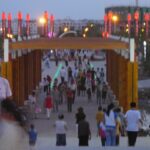
Celebrating Freedoms We Don’t Know Exist
On July 5th 2009, one day after America celebrated the anniversary of its freedom, a group of people on the other side of the world were forced to live without theirs.
All of this took place in the China’s far western province of Xinjiang following one of the deadliest riots in the country’s modern history. My wife and I had lived in the province for three years, surrounded by equal populations of both Han Chinese and an ethnic minority called the Uyghur (pronounced wee-ger).
We were aware when we first arrived back in 2006 that the region had a history of instability but on the surface the two groups were talented at hiding their ill feelings toward each other.
That Sunday, however, the peaceful façade was broken. Burning cars filled the air with a thick, black smoke that covered the raucous movement of thousands of club and knife-wielding rioters. We received frantic phone calls from our local friends warning us to stay inside and lock our doors.
The afternoon began with peaceful protests by the minority Uyghur group voicing their grievances to the local Chinese government. At some point in the evening things turned violent, riot police arrived in the city and by the end of the night almost 200 lives had been lost and 1,700 more had been seriously injured.
I went to sleep late that night like many others, scouring the internet for information on the truth behind what was happening. Conflicting reports were causing so much confusion that even people within the city had no clue what had occurred. We were all completely unaware that these hours on the internet would be our last moments of freedom.
When I awoke the next morning it was all gone. Internet. Text messaging. International calling. Gone. I couldn’t access my email and I had no way of calling my family back in America to tell them we were safe.
In response to the bloodshed, authorities in the region attempted to regain control by restricting communications with the outside world. While most people might balk at the idea of being without these services for a single day, we were compelled to live this way for 10 long months.
Of course nobody ever told us that it would last that long. When you first lose your freedom it usually takes a while to come to grips with what has happened. For the first couple of weeks I woke up every morning and religiously checked my computer for an internet pulse, each attempt met with no response.
This wasn’t a matter of information selectively being blocked; it was as if a kill switch had been thrown, sending the region back to the 19th century.
All across the province everybody was experiencing the same frustration, yet because the flow of information had been dammed we were each unaware of how far-reaching this restriction was. Businesses were stranded without access to their clients and all data that had been stored online was no longer available.
Internet cafes began collecting cobwebs and many of them eventually closed their doors for good. For those with families outside the country, such as my wife and me, contact was almost impossible.
Like irritating security checks in an airport, I slowly accepted as a norm the death of my freedom by the sword of security. There was nothing I could do but sit and wait, each day realizing more and more how much I had taken for granted the ability to retrieve and send information.
Unlike other people in the world today who have lost their basic freedoms, I was fortunate that the solution to the problem was as simple as leaving the country. Eight months after the riots had altered my life in far west China, I arrived back to my Texas home and embraced the simple pleasures of sending a text message or checking my email.
These activities are such a basic part of my life that until my time in China I never thought of them as “freedoms.” To imagine that American soldiers died so that I can surf the internet is unsettling and indeed quite humbling. How many more activities in my daily existence do I take for granted as part of my inalienable rights?
My wife and I are about to celebrate our first Independence Day on US soil in over 4 years and our appreciation for the holiday is deeper now than ever before. We have learned that our freedom is not only fragile, it is in many cases made up of personal rights that we don’t even realize exist. We are grateful that we live in a land that protects even those rights which aren’t explicitly written in our Constitution.
In May of 2010, two months shy of a year since the riots, the restrictions that cut off all internet and phone communications in Xinjiang were finally removed. Unfortunately, the ethnic tensions in the area remain firmly in place as the one-year anniversary of the deadly event nears.
For me, this experience in China will always give the coming holiday a special significance. This weekend is a time when I recall what it was like to live without freedom, to live without the rights I tend to take for granted. At the same time it is a celebration of a country and a heritage that value liberty and justice for all its citizens, even those who disagree with it.


As I say to my wife there are times and days that change your life.
July 5th 2009 was one of those.
[Reply]
I love American Spirit-“that all men are created equal and independent; that from that equal creation they derive in rights inherent and inalienables, among which are the preservation of life, and liberty and the pursuit of happiness;”
[Reply]
damo says: July 5th, 2010 at 9:32 am
Except if you have come from south of the border ie Mexico.
[Reply]
damo
you are soo right. They can illegally go through the border, work illegally in US, break US laws and complain that their rights trumps the citizens rights to happiness, liberty and equality. Because, you see, some are equal and the ones from the south of the border are created more equal.
[Reply]
Josh says: July 6th, 2010 at 4:15 am
How on earth did this piece become grounds for commenting on US border policy?
[Reply]
kahraman says: July 6th, 2010 at 9:08 am
五毛党! besh maw partiyasi!
[Reply]
amazing – we have NO IDEA how much we have – and can lose. brilliant article.
[Reply]
“amazing – we have NO IDEA how much we have – and can lose. brilliant article.”
Too much. Everything you have is borrowed. Let’s hope you can work hard and pay back someday.
[Reply]
Leave your response!
Follow via Twitter
Subscribe via RSS
What is RSS?
Recent Comments
Popular at FarWestChina
Other Xinjiang Sites
China's Best Blogs
FarWestChina on Flickr
Most Commented Articles
About FarWestChina
FarWestChina is a website dedicated to opening the door to Xinjiang, China's most mysterious province.
My name is Josh Summers and I have an unexplained passion for this region. Although I now reside in the US, I spent almost 4 years living and traveling in the region and I continue to research the history and stories Xinjiang has to tell. If you're interested there's plenty to read about Xinjiang on this website, or learn about me on my about page.
Connect with Josh
Feel free to connect with me on your social platform of preference: Twitter, Facebook, LinkedIn, or StumbleUpon.