Uyghur Kebabs w/ Lamb | Xinjiang Cuisine
If you’ve ever eaten Uyghur kebabs from Xinjiang, China, you know exactly why it’s one of the most popular dishes in the region. I’d like to introduce you to this regional cuisine, explain what makes it so special and take you with me as a Uyghur kebab master teaches me how it’s done.
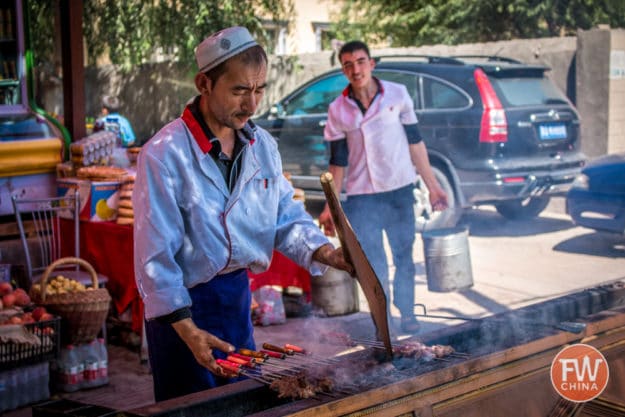
- Local Name: “keebab”
- Chinese Name: 烤肉 (kăo ròu)
- Alternate Names: Xinjiang BBQ, kebabs, lamb-on-a-stick
- Description: Alternating pieces of lamb meat and fat roasted with spices on a stick
No matter where you go in Xinjiang, there will always be the smell of lamb cooking over an open grill.
There’s something about the beautiful combination of meat, fat, cumin, spice and salt that makes the Uyghur kebab in Xinjiang special. It’s unlike any other lamb kebab you’ll find in the world.
But what makes these Uyghur kebabs so special? It all starts with the lamb.
Lamb Meat | Central to the Uyghur Diet
The Uyghur people, one of the many different people groups present here in Xinjiang, are the experts at cooking lamb kebabs.
Come to think of it, they’re experts at everything having to do with sheep meat and all other body parts. It’s considered the most ethical meat to eat, too.
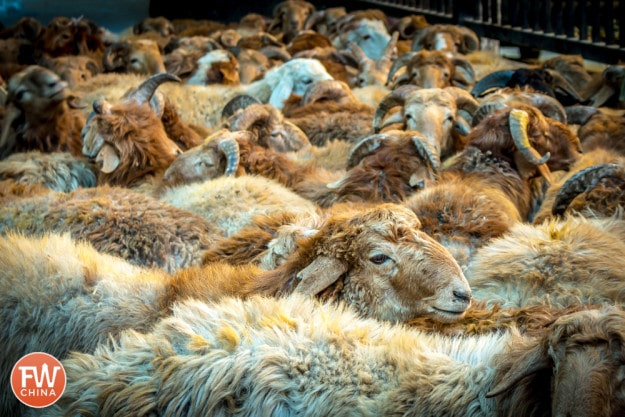
Because most Uyghur identify as Muslim, you won’t find very many that will eat pork, much less go near it.
While this does leave chicken and fish as options, they usually forgo these two and make every dish with some part of the lamb.
Various forms of kebabs are available (with various parts of the lamb), but the most common and my favorite is what is the simple lamb meat kebab.
It usually involves alternating pieces of meat and fat (surprisingly good!).
These pieces are seasoned with a blend of spices which can be quite tasty and cooked over a grill heated by either wood or charcoal.

Secrets of How to Make Uyghur Kebabs
A while back, I was invited by a good Uyghur friend to take part in one of Xinjiang’s most popular pastimes: the BBQ picnic.
Having spent part of his life behind a Xinjiang kebab stand outside the province, my friend shared with me the secrets that make the kebabs in Xinjiang that much better than those beyond the provincial borders.
These are the five secrets he shared with me that make Xinjiang kebabs special.
Secret #1: Using the Correct Kind of Fire
One of the most important aspects to a quality kebab is the fire.
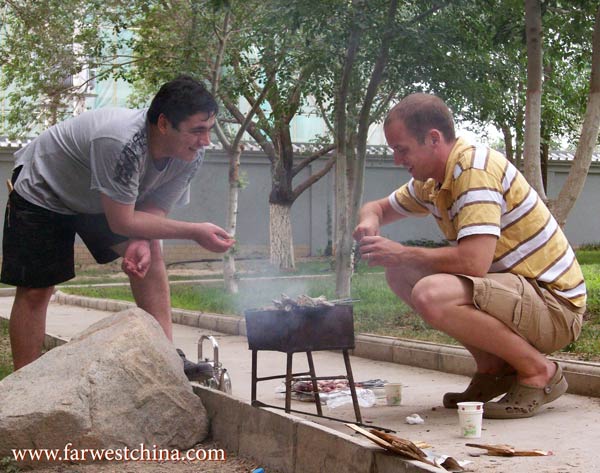
When my wife and I arrived at our friends’ home early one Saturday we were each given specific tasks. It was my job to head to the basement and grab the grill.
Expecting a large setup not unlike what I might find along the streets, I was surprised to encounter a grill no bigger than a half a meter.
“This will make the grilling faster” my friend explained.


Throughout our travels in China, my wife and I have seen kebabs cooked in all sorts of ways, my favorite being those I saw in Beijing cooked with a hair dryer.
A few kebabs were fried, some at the fast food restaurants were just heated on an electric stove, but my Uyghur friend explained that today we would be doing kebabs the “authentic way”.
…if you want a really good kebab you have to use wood…
Translation: We wouldn’t be burning the ever-abundant coal often used throughout China and northern Xinjiang – we would be using wood more popular in the south of the province.
Apparently this wood was a valuable commodity in our desert area and he had to pay a high price to get some for us.
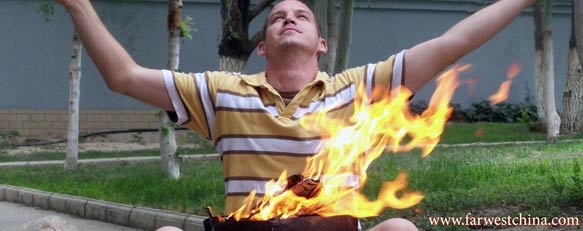
“People use coal because it’s cheaper, but if you want a really good kebab, you have to use wood.”
Coal is also preferred because it cooks faster than wood he explained, but it would give the meat a better flavor.
Secret #2: Selecting the Right Kebab Meat
It makes sense that just like all steak is not equal, not all lamb meat is the same either.
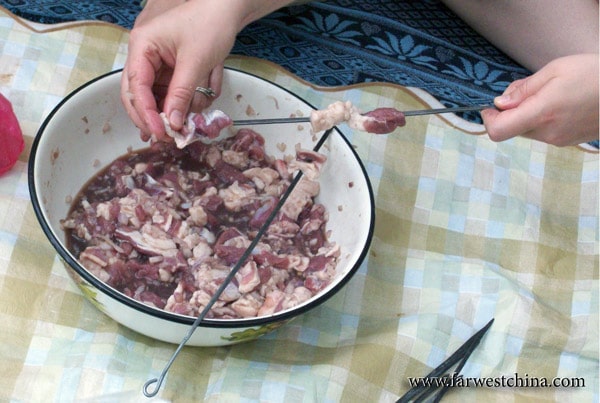
Apparently most kebab stands cut costs by using the less-desirable meat and cutting it into incredibly small pieces that grill quickly.
My Uyghur friend had already gone to the market to select the perfect slab of lamb with a balanced combination of meat and fat. It had been cut into medium-sized chunks and was being marinated in a large bowl – something that most street vendors fail to do.
“My secret to the perfect kebab is the marinade” he told me, although he never revealed the exact ingredients to his marinade.
After only an hour in the bowl both our wives sat down to the task of preparing the skewers.
Meat – fat – meat – fat – meat – fat.
“Most restaurants offer a variety of kebabs” my friend said. “It’s a mistake to buy the cheapest ones because those are usually made with the lesser meat. The good kebabs are usually thick, prime and a bit more expensive.”

The reality? They’re almost 2-3 times as expensive.
A regular kebab in Xinjiang (in 2010 at least) usually cost about 1-3 RMB, but the better quality skewers run upwards of 6-8 RMB.
Secret #3: Quality Matters, not Quantity
Interestingly, my friend refused to cook more than 8 kebabs at a time. At first I thought it had something to do with our small grill.
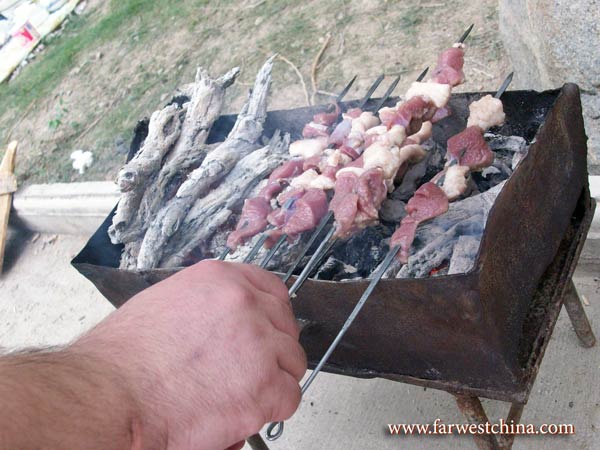
He insisted that creating an even heat distribution was key to a perfect kebab.
“People who really know what they’re doing might be able to cook 20 or 30 at a time, but often they end up sacrificing taste for time” he said.
Our thick kebabs, skillfully prepared by our wives, sat on the grill for at least 10 minutes per group of eight. Every couple of minutes they would be turned and sprinkled with generous portions of cumin and ground peppers.
I could tell my friend was a kebab master just by the way he handled the skewers. Instead of turning them one-by-one he was able to grab the whole lot and turn them in one swoop.
It sounds (and looks) simple, but I can share from experience that amateurs will either drop one in the fire or end up having to turn them individually anyway after their failed attempt.
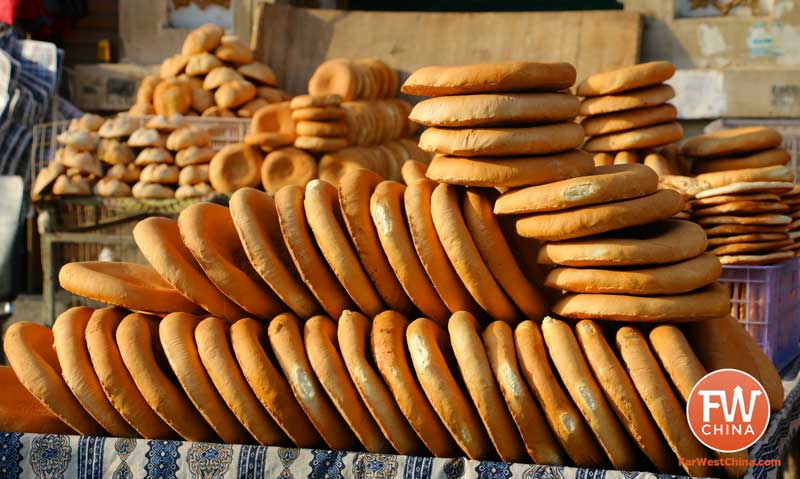
Secret #4: Always Request the Uyghur Bread
Lamb meat is naturally greasy and there is no better use for that grease than on a piece of Uyghur bread.
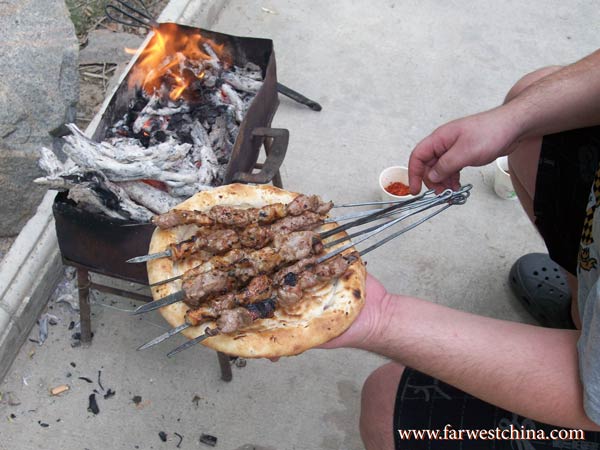
“I always ask for the bread” my friend said.
Usually kebabs are served alone on a plate, but by requesting bread, the grease from the kebabs will be used to soften and flavor the bread.
Every Uyghur restaurant in Xinjiang will either have bread on hand or have somebody run down to the nearest bread stand, which usually isn’t far.
Since kebab makers outside Xinjiang don’t have the same luxury, most people miss out on this incredible food pairing.

Secret #5: The Right Uyghur Kebabs Atmosphere
I believe it’s not just the food, it’s also the atmosphere.
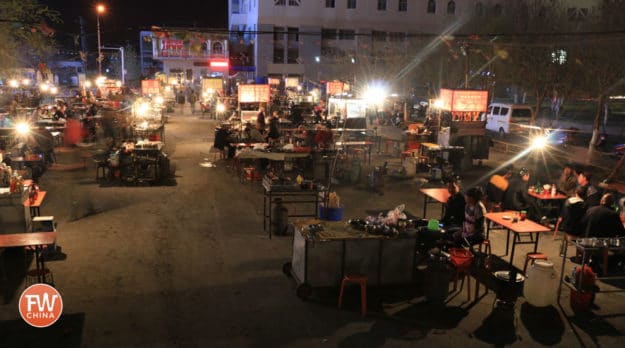
Whether it’s a night market, a village gathering spot, or even a simple picnic spot, the atmosphere plays a large role in the experience of a Xinjiang kebab.
While BBQing with our friends we laid out a blanket in the grass and enjoyed the breeze. If I’m going to a restaurant I don’t even hesitate to request outdoor seating.
Because we only grilled 8 kebabs at a time, our meal was stretched out for hours as we leisurely conversed and downed cold beverages. Even thinking about it today makes me want to pull out my grill but I have no doubt that any kebabs I made just wouldn’t compare to those of my Uyghur friend.
I’m convinced that even though Uyghurs may not have invented lamb kebabs, they have perfected the art of cooking them.