Kashgar’s Apak Khoja Mausoleum | Traveler’s Guide
When traveling to Kashgar, a visit to the Apak Khoja Mausoleum is a must. Although you may see it written differently (sometimes “Apak Hoja” or in Chinese “阿帕克霍加麻扎”), the location is a beautiful example of Uyghur architecture and a fascinating peek behind the curtain of Kashgar’s history. Allow me to share some fun stories and photos in this Traveler’s Guide to Kashgar’s Apak Khoja Mausoleum.
The Silk Road outpost known as Kashgar, located on the western edge of China’s remote Xinjiang region, is full of secrets.
Travelers love to admire the beauty of the Id Kah Mosque and soak in the history of Kashgar’s Old City, so it’s hard to imagine anywhere else in this ancient Silk Road town that can compare.
Even as I took a taxi a few kilometers east of Kashgar’s city center, I wasn’t quite sure what to expect upon entering the Silk Road site known as Apak Khoja’s Mausoleum. Religious significance doesn’t always translate into worthwhile destinations, so I admittedly had low expectations.
Apak Khoja Mausoleum Details
- English Name: Apak Khoja Mausoleum, Afak Khoja Mausoleum or Apakh Khoja
- Chinese Name: Bāhéjiā Mázhá 阿帕克霍加麻扎 or Xiāngfēimù 香妃墓
- Entrance Price: 30 RMB
- Rating: Highly recommended
*Note: If you’re doing research on Kashgar or preparing to visit the city soon, all of this information and more can be found in the FarWestChina Xinjiang travel guide. I highly recommend you grab a copy (and I’m grateful for your support!).
Visiting the Apak Khoja Mausoleum
When I first visited Kashgar’s Apak Khoja Mausoleum in 2008, things were a bit different than they are now. A left turn off the main street led through a poplar-lined dirt road that felt like I was being transported back in time.
For better or worse, the area surrounding the mausoleum has been upgraded. That same left turn leads to a massive parking lot and a paved road lined with stalls for restaurants and vendors.
In all, the mazar complex is can be divided into four distinct sections:
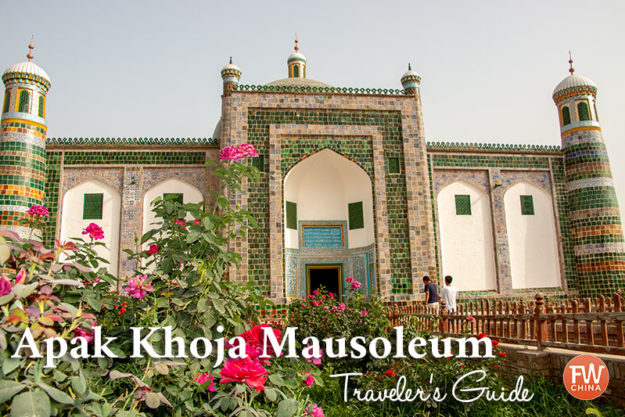
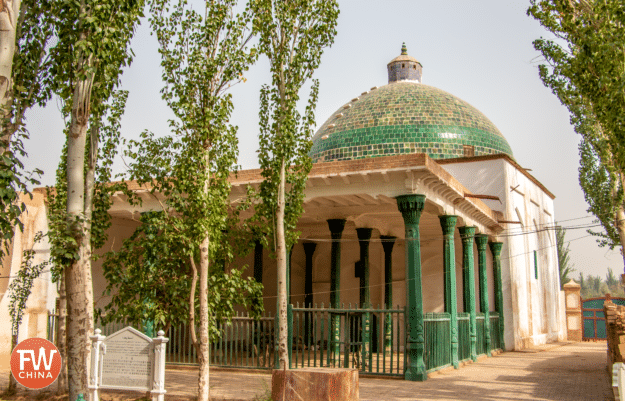
- The primary mausoleum: This is the green-glazed tile building that you’ll spend the most time photographing.
- Four prayer halls: These are spread out across the campus and each retain similar architecture.
- One lecture hall: Which at one time was used for Islamic education.
- A massive Uyghur cemetery: This cemetery used to surround the entire mausoleum but is now fenced behind it.
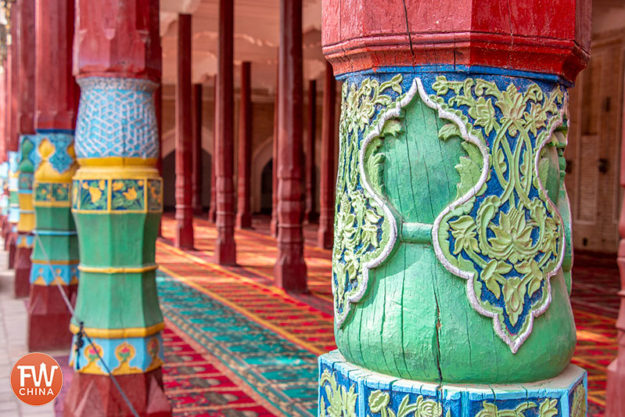
Each building of the Apak Khoja Mausoleum is a veritable shrine to ancient Islamic architecture and Uyghur woodcarving whose colorful tiles and beautiful paint are slowly being lost due to neglect and insufficient funds.
While the garden connecting all of these buildings isn’t worth highlighting in a Home & Garden magazine, it all added to the feeling of being antique. In my experience, the mausoleum has always been a very calming place to visit.
What you can’t see with your eyes, however, are the history and stories held in this place.

History of the Apak Khoja Mausoleum
The Apak Khoja Mausoleum was original built in 1640 as the final resting place of Yusef Khoja, a well-respected teacher of the Quran at the time. Both a mausoleum and a school were built on the grounds.
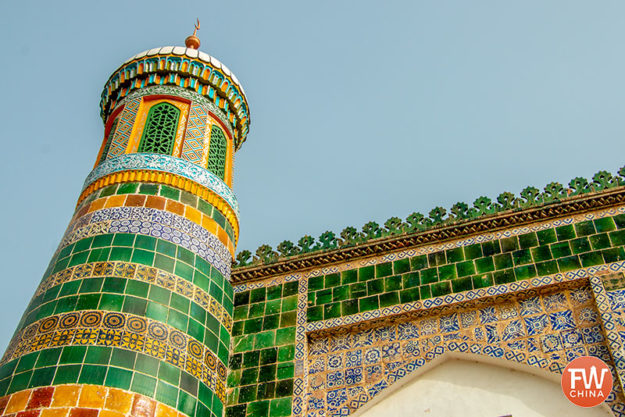
The mausoleum itself is a beautiful structure with four minarets and a large dome that measures 26 meters in height. Much of it is covered in a green-glazed tile mixed with various other designs.
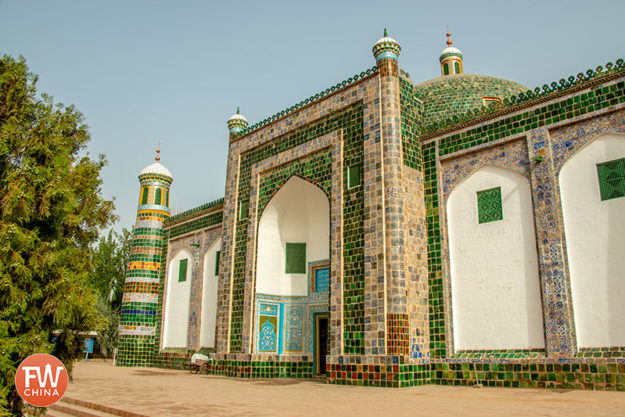
The building was completed and when Yusef Khoja died, his body was buried in the mausoleum.
Interestingly, Yusef’s son lived to become a well-known leader in Kashgar and when he was finally buried there, the complex was renamed after him. Thus we have the “Apak Khoja” mausoleum instead of the “Yusef Khoja” mausoleum.

In all, five generations of the ruling family were buried here. This represented a total of 72 people.
Currently, there are only 58 tombs inside the mausoleum. So what happened to the other fourteen?
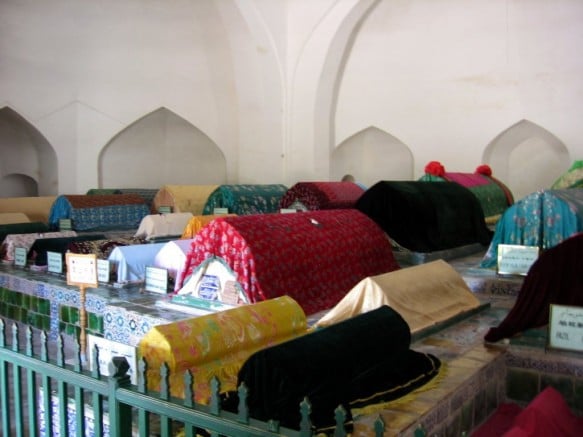
In the 1960s, an earthquake in the Kashgar region caused massive damage to the mausoleum, including the destruction of many of these tombs. The building was repaired but the tombs were never rebuilt, hence the discrepancy in number.
Despite the signs, one tomb you won’t find here is that of the so-called “Fragrant Concubine”.

The Story of the Fragrant Concubine
One of the most famous stories that has come from this complex of ancient buildings concerns the Fragrant Concubine (also known as “Xiangfei”). This local Uyghur woman was so beautiful that she caught the eye of Qing Dynasty Emperor Qianlong in the 18th century.
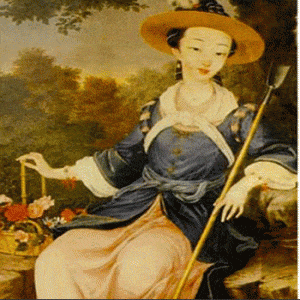
Her alleged tomb is the centerpiece of this site, and her story is plastered everywhere. It goes something like this:
During Emperor Qianlong’s quest to expand the borders of China he became entranced by the beautiful wife of his recently defeated Kashgar nemesis, a woman who was famed for the intoxicating scent her body gave off without the use of perfumes or powders.
She was carefully transported to Beijing to become the emperor’s newest concubine, reportedly wrapped in silks like a precious porcelain in a cart similar to the one you can see inside the mausoleum.
According to the Chinese she was granted every one of her desires, including a miniature oasis outside her new quarters in the Forbidden City, until she eventually resigned herself to her fate.
For the Chinese she is a symbol unity between themselves and their new territory, a place which around this time was renamed Xinjiang, or “New Frontier”.
The Uyghur, however, insist on a different version. They remember Iparhan (her Uyghur name) forever pacing in the Forbidden City, never happy. When threatened by the emperor’s mother to either resign to her fate or commit suicide, she boldly chose death over dishonor, a representation of the struggle the Uyghur face – even today – against Chinese rule.
Here’s her secret: Some accounts of this story claim that upon her death her body was taken back to Kashgar and buried in this mausoleum. Even the sign at the entrance to the Abak Khoja complex claims that “Xinafei [The Fragrant Concubine] was also buried in this tomb”. Tour guides will point to the cart inside the big mausoleum and claim that this was the cart that transported her body.
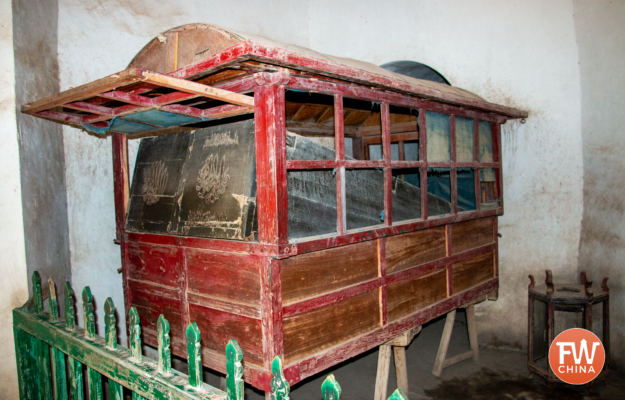
The truth of the matter is that recent evidence suggests that she was probably buried in Beijing.
Secret “City of the Dead”
Perhaps my favorite section of the mausoleum is what is called the “City of the Dead”. If I hadn’t been looking for it I might have missed it.
To the north and east of the mausoleum, on the other side of the wall, is an above-ground cemetery that is home to thousands of tombs. These are different than the Turpan Astana Tombs which are below ground. I’ve seen similar mud burial sites all throughout Xinjiang, particularly in the Taklamakan oasis towns.
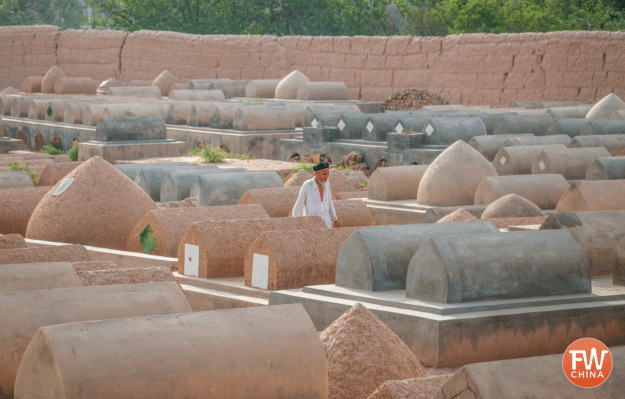
What you may not know is that this City of the Dead used to cover much more area than it does now. In order to accommodate all the tourist, the cemetery was downsized and the part in front of the mausoleum was replaced with a rose garden.
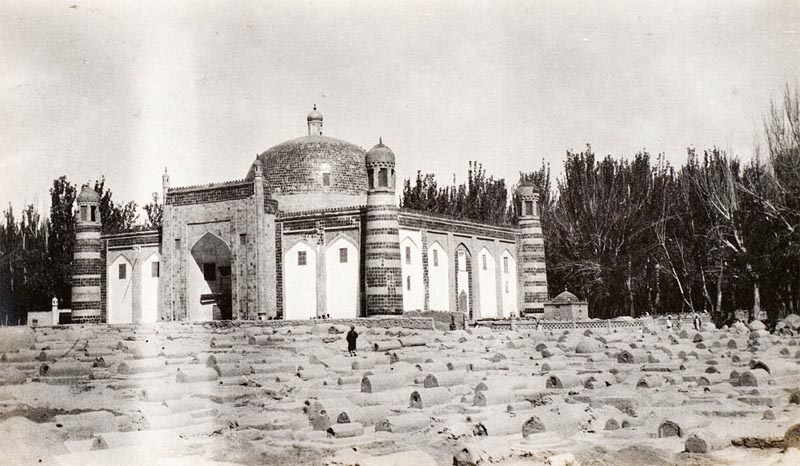
What most people don’t know – and China purposely omits this information – is that the remains of the famed and ruthless Uyghur leader known as Yakub Beg were once buried here.
British missionary and explorer Henry Lansdell makes mention of it in 1888 as does Swedish diplomat Gunnar Jarring in 1930. In his book “Kashgar Revisited”, Jarring says:
“…after Yakub Beg’s fall, the Chinese, who were back in power, had dug up his body and burned it. The ashes had been sent to [Beijing] and the Chinese officials had prohibited the setting up of a memorial or marking the place where he had been buried in any way.”
The fear from China is that Uyghur groups could use Yakub Beg’s tomb to fuel the flame of nationalism and separatism.
So, as you look out into the cemetery, not only will you notice that tourists aren’t allowed to enter, there’s also no mention of Yakub Beg’s name anywhere.
Conclusion | Kashgar’s Apak Khoja Mausoleum
Despite the fact that the Fragrant Concubine probably isn’t buried here and Yakub Beg’s remains certainly have been moved, I still recommend tourists make a visit to the Apak Khoja Mausoleum in Kashgar.
The place is in desperate need of a face-lift, there’s no doubt about that, but the 30 RMB entrance fee is worth a look at the ancient architecture, mausoleum, and the City of the Dead. A living monument to Uyghur history!
If you’re planning to make a visit to Kashgar’s Apak Khoja Mausoleum, you can learn more about how to get from Urumqi to Kashgar (free) and then don’t forget to purchase a copy of the FarWestChina Xinjiang Travel Guide!
What do you think? Have you been to the Apak Khoja Mausoleum? What did you think?