

What is the Best China Travel Guide Book 2020?
So you’re looking for the best China travel guide book on the market? One look at the travel section of your local bookstore and you’ll realize that competition in the guidebook business is fierce. The mistake that most people make is that they end up buying a guidebook based on name recognition (Lonely Planet, Frommer’s, etc.) without taking into account their individual needs for that trip.
Before you buy your travel book take a moment to look over this China Travel Guide comparison chart – get even more details by clicking on the book title.
| Pages | Weight (lbs.) | Color | Maps | Subways | Target Traveler | Planning | Pricing Info (USD) | ||
|---|---|---|---|---|---|---|---|---|---|
| Disclosure: The following links to Amazon are affiliate links. If this guide is helpful, please consider using them. Thanks! | |||||||||
| Lonely Planet | 1056 pgs | 1.8 |  | | Budget | Good | LP Pricing | ||
| DK Eyewitness | 660 pgs | 1.9 | | | | Mid-Range | Helpful | DK Pricing | |
| Fodors | 736 pgs | 1.5 | | | | Budget | Decent | Fodor’s Pricing | |
| Frommers | 896 pgs | 1.5 | | | Mid-Range | Poor | Frommers Pricing | ||
| Rough Guide | 1008 pgs | 1.8 | | | | Budget | Decent | RG Pricing | |
| Gorilla Business | 332 pgs | .8 | | | Mid/High | Helpful | GB Pricing | ||
1. Lonely Planet China

Lonely Planet stands out as one of the most recognizable travel guides all over the world – I’ve personally used them for many years myself.
In addition to the Lonely Planet China guide, LP also offers updated guides for Beijing and Shanghai. The current edition of each of these books was published in 2017, which makes them relatively up-to-date.
I like that they also publish an ebook version of their China guide which could cut down on the added packing weight.

Target Traveler:
Budget travelers, backpackers, people who know what they want to see.
Top Features:
- Mind-numbing detail you won’t find anywhere else
- Tons of maps for every part of China
- Helpful language guides in Mandarin, Cantonese, Portuguese, Tibetan and Uyghur.
- Excellent ebook options for travelers.
What it Lacks:
- Very few pictures aside form the first chapter. Lonely Planet is very text heavy, so don’t rely on this book to show you where to go as much as tell you.
- No dedicated subway maps for Beijing, Shanghai, and Hong Kong, although the subway stations are indicated on the map.
Summary:
The maps are good but are almost unreadable because there is so much information crammed inside. Same goes for the language guide. How many travelers are going to need to know the phrase “How long can I park my car here”? I mean, really. The Lonely Planet’s greatest strength is also its Achilles heel: so much information!
The book is an animal to carry around (almost 2 inches thick) and tries to cater to every type of traveler, which it proves is difficult but possible. Thankfully they now have an ebook option that is much lighter and allows you to only purchase the sections of the book where you will be traveling.
Aside from this, however, there is a reason that the Lonely Planet is such a popular travel guide. They meet a need and do it well.
–> Check Pricing of Lonely Planet China on Amazon.com <–
2. DK China Eyewitness Travel
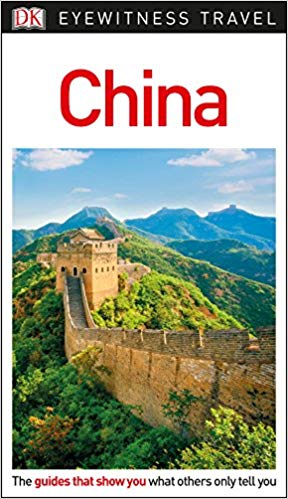
The DK Eyewitness Travel guides “truly show you what others only tell you” according to their own promotion. I love the visual appeal of the DK Eyewitness Travel China, which is unrivaled among China travel books in my opinion. Their photos are beautiful and are helpful for those who don’t quite know exactly what they want to see in China.
Unfortunately DK is one of the few travel guide publishers that does not offer an ebook option for either their China guide or their DK Beijing and Shanghai. Thankfully, you can still get an ebook version of their Top 10 Beijing and Top 10 Hong Kong guide books.
Target Traveler:
Mid-range budget, drawn to popular tourist spots, needs ideas for places to go.
Top Features:
- Incredible pictures, maps, and 3D illustrations
- Subway maps for Beijing, Shanghai, and Hong Kong
- Pleasant, colorful design backed by great travel advice
What it Lacks:
- Restaurant and Hotel selections are sparse for smaller regions
- Only scratches the surface of available destinations in each region
- No eBook version available for download.
Summary:
If you want a ton of hotel and restaurant options for each and every city, there isn’t quite as much detail as you may desire. The details sections are enough to get you by if you’re willing to only choose from a handful of options.
What the DK Eyewitness China guide lacks in information it tries to make up for with pictures and beautiful illustrations. If you’re a traveler who wants to visit someplace different but needs ideas on which places would fit their desires, this guide will help you plan.
–> Check Pricing of DK China on Amazon.com <–
3. Fodor’s China
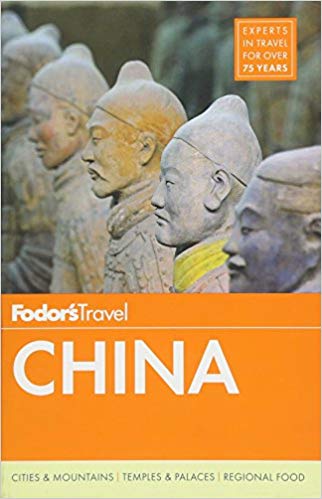
Fodor’s claims that having this Fodor’s China guidebook along is like “having a friend in China”. It provides a good balance between the necessary details and helpful tips and illustrations.
This new edition was recently published in April of 2019, so it’s one of the most up-to-date China guides available on the market right now, although it’s only available as a paperback right now.
The old edition is still available as an ebook version as well.
Target Traveler:
Low/mid budget, travels outside the big cities, has a general idea of what they want to see.
Top Features:
- Great maps and diagrams, now all in color.
- Fantastic location guide that names each location by Chinese character and corresponding pinyin
- Useful “If you like [this], then go [here]” section to help travelers plan itinerary
What it Lacks:
- There are plenty of pictures, but they’re not that big.
- Fodor’s guides are only updated once every 2 years or so, which means that the information can easily be updated.
Summary:
It’s a mid-size book that does a great job of educating travelers to be smart when visiting China and helps you figure out the kind of places that might be of interest for you to see and visit. Fodor’s China is a cross between the Lonely Planet’s dedication to detailed information and DK’s liberal use of photographs.
Thankfully, they’ve also made the entire guide in color for this newest edition, something that they had failed to do with the previous six.
–> Check Pricing of Fodor’s China on Amazon.com <–
4. Frommer’s China

According to Frommers, “the best trips start here”. This is another medium-sized book similar to Fodor’s, and just like Fodor’s, Frommers China does not offer an ebook option.
This particular edition of the China travel guide was published in 2012, so it’s a bit old in my opinion.
They have a newer Frommer’s Beijing, Xi’an and Shanghai travel guide that comes as an ebook as well.
Target Traveler:
Mid-range, periodically ventures off the beaten path, knows itinerary and may join tour group.
Top Features:
- Easy-to-read pages with bigger fonts
- Useful “Popular Dishes” guide for eating in China and other language helps
- Rates destination on whether they might be good for kids, a great value, or perhaps overrated
What it Lacks:
- No Pictures: like Lonely Planet, Frommer’s expects travelers to know what they want to see
- It has subway maps for Beijing and Shanghai, but for some reason not Hong Kong.
Summary:
It’s also one of the few guides that seems to cater to those traveling with kids. Each destination is rated on value and whether or not it might be good for kids to enjoy. Frommer’s China seems to be the most comprehensive guide for the mid-range budget. The bigger text almost confirms that this was published with the more mature traveler in mind.
–> Check Pricing of Frommer’s China on Amazon.com <–
5. The Rough Guide to China
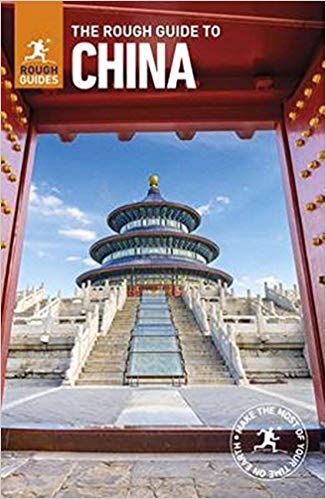
The Rough Guide to China is by far the largest of all the China guides, beating the Lonely Planet by almost 200 pages. Very handy (and hefty) for the wandering backpacker.
The Rough Guide is another one that has been made into a helpful ebook travel version, so this is one way to avoid the extra weight.
Target Traveler:
Low budget backpackers, wants off the beaten path, just wants to explore.
Top Features:
- Extensive language section for those who need the basics
- A colorful description of festivals in China
- More information than you’ll use in a lifetime
What it Lacks:
- No suggested itineraries for travelers who don’t know where they want to go.
- Ad-free environment. Their “Store” is a glorified classifieds that can be quite annoying.
Summary:
This isn’t necessarily recommended for anybody whose whole trip will be spent in hotels instead of dorm rooms. If you’re not roughing it, don’t use the Rough Guide! If you have the extra space and the desire to lug around a couple extra pounds, The Rough Guide to China provides one of the most detailed views of China, which even includes pictures of the different dishes you might want to order.
–> Check Pricing of Rough Guide to China on Amazon.com <–
6. Gorilla Guide’s Business Travelers China
Gorilla guides cater to the specific needs of a specific group of travelers: the China business traveler.
So whether you’ll be traveling for only a couple weeks through China or staying here for years at a time, this is going to be a practical guide for etiquette, business tips and travel information.
Target Traveler:
Mid/High range budget, doesn’t have much time to leave the city, can’t really “plan” their trip.
Top Features:
- China-specific industry tips and insight
- Maps of the key business districts
- Details on China business etiquette
What it Lacks:
- Not meant for the casual traveler
- Already a couple years old, which for China business is a long time
Summary:
Those who will be coming over for a short (1-2 week) business stay or even a year or two long stay on company business, however, might find this useful. Probably even more so than a Lonely Planet or a Fodor’s just because it gets rid of all the backpacker tourist fluff. If you have a tourist visa, this probably isn’t the book for you. The information in the Gorilla China Business Guide is far too specific to a business trip.
–> Check Pricing of Gorilla Guide China on Amazon.com <–
BONUS: China Travel Survival Guide
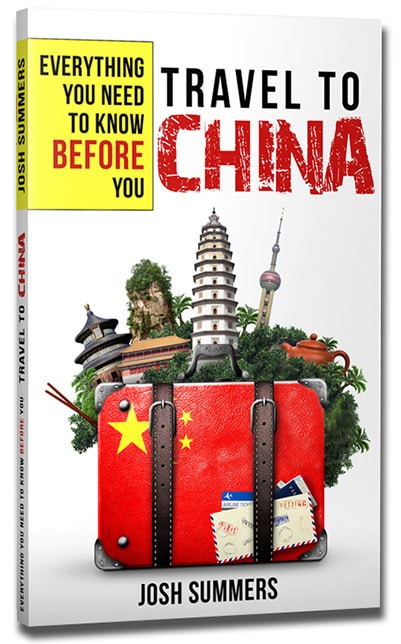
For those who may be traveling to China for the first time, I’d like to share with you a bonus resource that I believe you’ll find most helpful.
Whereas all of the above travel guides do a great job answering the “what” questions of China travel, this book is the perfect answer to all the “how” questions for China travel.
Disclaimer: I wrote this book, so I’m a bit biased about how helpful it will be for you ;)
Target Traveler:
First time China travelers who aren’t quite sure what to expect when they arrive.
Summary:
efore you make the leap to purchase any of the above China travel guide books, you might find a copy of Travel to China | Everything You Need to Know Before You Go a perfect starting point. It’s a guide that helps you set expectations for your journey to China by giving you practical tips on transportation, using your phone, finding good accommodations, getting around without speaking Chinese, etc. It’s everything I wish I had known before I first stepped foot in China!
–> Check Pricing of Travel to China Survival Guide on Amazon.com <–
Conclusion | Best China Travel Guide Book
As you can see, there are plenty of options to choose from when you’re looking for the best China travel guide book. The primary things you want to consider as you pick the right book are:
- Does this book cater to my travel needs? (i.e. budget traveler, history buff, business, etc.)
- Does this book offer an ebook version?
- Has this China travel guide book been updated recently?
- Will I be sticking to the big Chinese cities or exploring off the beaten path?
Once you’ve nailed down the answer to these questions, it will be easier to determine which China travel guide book is right for you. I hope this has been helpful!