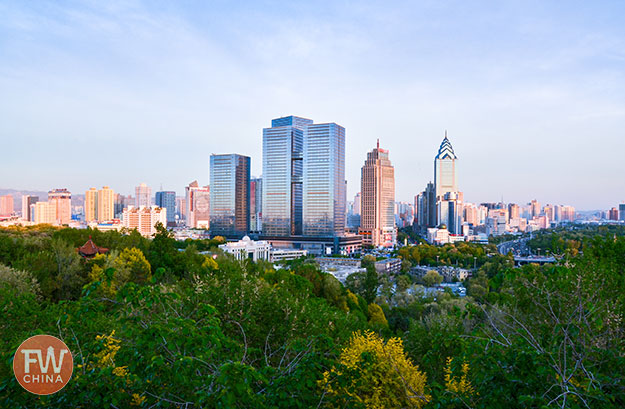
Xinjiang Crippled by Urumqi Riots; Curfew Set (July 5, 2009)
On Sunday, July 5th at around 9:30pm Beijing time, a riot began which has crippled Urumqi, the capital of China’s Xinjiang province. As with any such event here in China, reports are sketchy and numbers vary drastically.
Misleading photos and estimations are already circulating all over the web. Reliable details won’t be available for at least another 24 hours, but here is a list of what can be confirmed:
- Many Uyghur have taken to the streets of Urumqi, overturning vehicles and breaking store windows;
- Deaths have occurred (reports of three as of this writing, but not confirmed);
- A curfew has been set for all residents of Urumqi (official government-issued announcement);
- Most videos and pictures about this riot are being blocked in the mainland as soon as they appear on the internet.
What is not clearly known at this time is the reason for the riots.
Most people speculate that it has something to do with the incident in Shaoguan in which a toy factory brawl left 2 Uyghurs dead and many more injured.
Blame for the Urumqi riot will most likely land on the shoulders of Rabiya Kadeer, one of the most prominent Uyghur leaders who had called for the Uyghurs to protest this incident.
If you are planning on traveling to Xinjiang anytime this week it might be wise to reconsider your plans. Security will definitely be tight and police on high alert at this time.

An update will be made once further information is gathered, but until then you can read more here:
Update 7/6: The internet has now been cut as well as all international phone lines. Communication outside of Xinjiang has become extremely difficult, rendering regular updates to this article impossible.
Update 7/31: The China Daily reports that the riots left 197 people dead and over 1700 injured. Over the past month over 1,600 people have been detained in connection to the riots with trials to begin in mid-August.
Physical Changes in Xinjiang Due to the Riots
Due to the fact that the internet here in Xinjiang has been cut for several weeks I’ve had plenty of free time to soak in all the stories I’ve heard, process what has happened, and do my own research on the subject of unrest in Xinjiang.
During this time I’ve also been able to witness the physical changes that have been happening as a result of the July riots in Urumqi.
Here are just a few examples from my small city 4 hours north of Urumqi:
- Checkpoints have been set up at every exit point in the city as well as at various points along the major highways. Foreigners such as me must register our every movement.
- The internet was cut around 7-8am on July 6th…sort of. Access to sites that are hosted on servers within Xinjiang (which happens to be all local news) are available but anything outside is gone. No email, Skype, international news, etc. It’s been terrible. Only journalists have been allowed internet access in Urumqi and apparently bloggers don’t count as “journalist” here.
- International phone calls have been limited. According to officials it has been completely cut but we’ve been able to make and receive a couple calls, albeit after countless unsuccessful attempts.

- On Tuesday, July 7th, a massive company of military vehicles and soldiers occupied Karamay, our city, on rumor that some of the Urumqi rioters had moved north.
- That same Tuesday every office and store was closed as police constantly patrolled the streets due to the rumor mentioned above. Unaware of this lockdown, I innocently rode my motorcycle into a desolate downtown area to find a unit of over 150 police patrolling both major mosques.
- All auxiliary entrances to our neighborhood have been padlocked, allowing passage only through a single guarded gate. Such is the case in every community in our city.
- Rumors of bombs and buses burning have been circulating around the city but I have seen nothing and a friend who works for the local newspaper said nothing has happened.
I am dedicating the remainder of this week to this tragedy that has set every single person in Xinjiang on edge. Because of this communications blackout we are currently enduring, I don’t know how much of this is old news so please be understanding.
Some is based on first hand experience during my trip to Urumqi soon after the riots while one will be an unconfirmed story that I find to be encouraging.
During this time, please feel free to fill the comment board with stories you’ve heard or opinions you have, but please do so without unnecessary accusations. This region of China has endured the awful grip of hatred for long enough; taking on this mantle is not heroic.
Finally, I will apologize ahead of time for a lack of personal pictures accompanying these stories. I am no professional journalist, and as much as I enjoy this blog I have no desire to part with my digital camera, or worse, with my personal freedom for the sake of a single photograph.
Also, apart from scores of military personnel and some property damage, I have thankfully witnessed very little action.
My hope is that it stays that way.